Kahoot is a great way to get all learners engaged in a lesson! It is very helpful to help monitor the progress of each individual student in the classroom as well as differentiating the questions to best support the learning needs.
Smartboard is another great way to provide the students with fun interactive activities for the students! They love getting the chance to be physically involved in their learning. Creating sing along songs that dictate motions is another way to get students up and moving during a lesson!
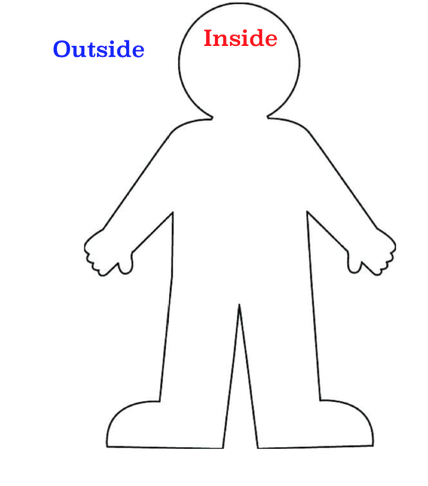
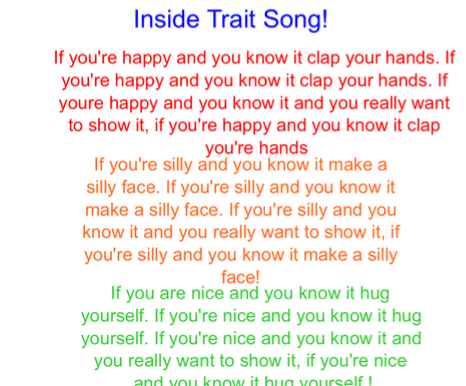
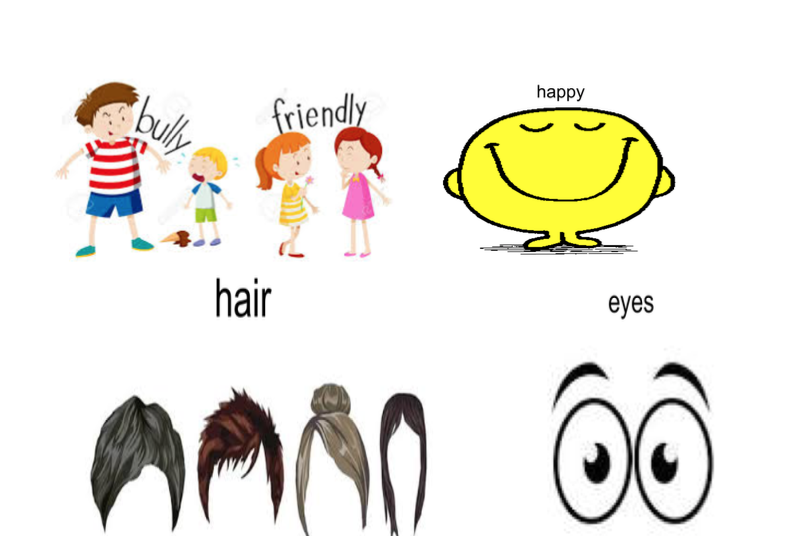
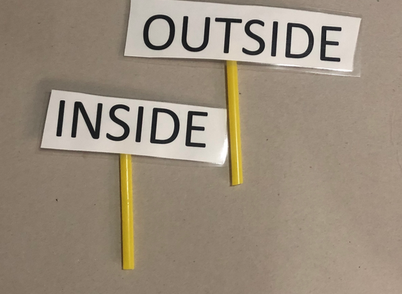
Smartboard slides can be used to show children character traits. Using their sticks, and working in pairs, students were given the task of identifying whether an image was representing an inside or outside character trait. Inside and outside sticks to represent inside and outside character traits. Inside character trait song that can be used to help demonstrate what an inside character trait is. Children can be interactive with this activity by doing the movements that were dictated by the song.
iPads are helpful to allow students to be engaged in lessons and express their knowledge of the topic. It is also a great way to represent information to the students. It aids those that may need support with text to speech and speech to text. It allows them to be able to participate in class and group activities to the best of the abilities.
Teacher:
Emily Gagliano Date: June 25, 2019 Subject:
Social Studies
Materials
Needed:
The
materials that are needed to make sure that this lesson will flow smoothly are:
Inside and Outside
character trait chart, I broke my Trunk! Book, Character trait work sheets,
Inside trait Song, character trait cards, trait chart, inside outside character
trait sticks, kahoot, iPads, lap tops,
and Smartboard slides with character traits.
Lesson
Objectives:
When the lesson is
concluded, the students will be able to
1.Define inside and
outside character traits.
2.Identify 3 inside and
outside traits of characters from the book.
3.Distinguish inside
from outside traits.
The
observational proof and evidence that they are successful is having grading rubrics
to help assess their worksheets and assessments. The students will complete
worksheets independently, but, their work will be collected and have their recorded.
I will also meet with students one on one
and conference with them. I will note who will able to explain what character
traits are and what the difference is between the two kinds.
There
will be a total of 6 assignments, each assignment will allow for students to
write, organize, and state what an inside and outside character trait is and
provide an example.
Standard/Benchmark/Indicator:
The
standards and learning objectives for my lesson supports the children’s active
and multimodal learning in several ways. Aligning my lesson with district and
state standards allows for me to build off of my students prior knowledge.
Previous lessons and activities act as scaffolding for the new lesson that is
going to be taught to the students.
ELA:
CCSS.ELA-LITERACY.SL.K.1.A
Follow
agreed-upon rules for discussions (e.g., listening to others and taking turns
speaking about the topics and texts under discussion).
CCSS.ELA-LITERACY.RL.K.3
With prompting and support, identify characters,
settings and major events in a story.
CCSS.ELA-LITERACY.SL.K.1
Participate in collaborative conversations with
diverse partners about kindergarten topics and texts with peers and
adults in small and larger groups.
Anticipatory Set:
Each
of the learning experiences builds upon the other in order to support the
children’s language and literacy development. In the first learning experience,
I will be introducing the concept of character traits, which may be a new
concept for most of the children. After introducing and discussing what a
character trait is, we will then go into more depth and address the two types
of character traits. We will then go over the similarities and differences of
inside and out character traits. Next, the children will apply the knowledge of
character traits to two particular characters from a book. We will began by
discussing what we can see, the appearance, of the characters on the cover of
the book. The children will then listen as I read the book to them, I will give
them the task of paying attention to the actions taken by the characters in the
book to help us determine their inside traits. Additionally, the children will
have the opportunity to share what was learned about the characters by
participating in a turn and talk and group discussion about identifying the
inside and outside traits of the characters. After having some background and
working knowledge of character traits, the children will use their knowledge
and apply it to describe the outside and inside character traits of the
characters in the book. Furthermore, the learning will be active since the
children will have the opportunity to come up to the board and drag and place
the trait on either the outside trait or inside trait side of the characters. In
the next lesson, the children will listen to a song that I wrote about inside
character traits. The children will have the opportunity to sing the chorus as
a whole in order to make the lesson active and multimodal. Additionally,
children will participate in bodily kinesthetics through movement by acting out
the movements that the song dictates to do. Next, the children will have to
come up to the board and will be given a character trait. The child will then
have to determine whether the trait is an inside or outside trait and place it
correctly on the chart with an explanation of why they choose their answer. The
rest of the class will be asked to put a thumb up if they agree or a thumb down
if they disagree. This will allow me to gain an insight of how well the
children are understanding the material. After complete the chart, the children
will be asked a series of questions about the material we have just learned
about. They will be asked to go back to their seats to complete individual work
that will be reviewed for further individual analysis. At the end of the
learning segment, the children will be asked to summarize the information that
they have been learning about and apply it to create their own character trait
analysis of the characters we have read about. This flow will allow the
children to build on the knowledge from the previous learning experience and
then bring everything together in the final learning experience, this provides
scaffolding for along the way. To help scaffold the children’s learning, there
will be a review at the beginning of each learning experience and an assessment
at the end. This will help to reinforce the previous learning experience, while
being able to build and expand on the concept further the next day. Each day, the
children will be assessed both informally and formally.
Multiple
Means of Representation:
I will
keep posters and charts hanging up
around the classroom for the children to be able to refer to them whenever they
need. Additionally, the information will be represented to the children in
multiple different ways. It will first be introduced to using a visual inside
and outside character trait chart. This chart will have images and color coded
words to allow students to be able to visually see the differences between
outside and inside character traits. There will also be posters and charts
placed throughout the classroom that we have completed during the learning
segment. This is so that the children will be able to refer to them whenever
needed. Next, the students will be introduced to an inside character trait
song. This supports those who benefit from being physically involved in their
learning. The students will also be
given the opportunity to be fill in graphic organizes in addition to the
lecture part of the lesson. The worksheets for the graphic organizers will be
differentiated based on students needs. The words will be read to them and they
will be given the task of identifying character traits that best fit themselves
and have to cut them out and glue them onto the assessment in the appropriate
place. For example, the students with fine motor delay, or struggling readers
will be given a word bank with color coded words to help them be able to
visually try and decode or figure out the words. The fine motor delay students
will be able to just cut out the word rather than try and write it with a
pencil.
Multiple
Means of Engagement:
In
order to be able to support the varied learning needs of all the children in my
class, there are various steps that need to be taken. For select children, they
will be given the opportunity to share their thoughts to the class verbally
rather than writing them. I will also allow these children to be able to create
a drawing relating to their views and then have them explain the drawing to me
and the rest of the class. These children will be given additional time if
necessary. For the children who have better writing skills and tend to be shy,
they will be given the opportunity to write their views and thoughts. This will
include having a chance to display their knowledge in the various activities,
writing segments, and assessments. Throughout the learning experiences, I will
make sure to reinforce the key details and repeat key vocabulary terms for
those children who may have a difficult time processing new information.
Additionally, I will keep the posters and charts hanging up around the
classroom for the children to be able to refer to them whenever they need. For
the children who have fine motor delay I will provide them with word banks to
cut out and paste the words on their activities and assessments rather than
have them write the words in. For the struggling readers, I will also provide
them with a word bank, and print the words in the color so they are able to identify
them more easily, I will also read the words and directions to them as seen
needed. Lastly, I will provide the children with sentence starting and ending
words which will allow for the children to focus just on the inside and outside
character trait words
Multiple
Means of Expression:
Students
will be able to demonstrate what they have learned through formal and informal
assessments. Using iPads and laptops allows me to monitor how well the students
are retaining the information by using websites such as kahoot. This UDL style
of learning supports not only those but the whole class population as well. For
students who are struggling readers, vision impaired, and fine motor delay,
using laptops and iPads allow for an equal opportunity to be assessed on how
well the know the material. Students can use iPads to give their answer. Kahoots
provides us with chance to differentiate instruction. You can include different
level questions as well as images. After having an lower level question, I can
verbally ask a higher order of thinking question based on the kahoot question
that was just answered. Kahoots can also read questions aloud for those who are
struggling readers as well as color coding the answers. The informal
assessments that I will use in order to monitor the children’s learning will
consist of questions and positive encouragement to get the children to answer
the questions and participate in class discussions, turn and talks, and
activities. Children will be engaged in activities such as coming up to the
board and placing character traits in the correct section of a chart, dancing
and singing, and playing an instructional game that I have created. This will
allow the children to be active participants in their own learning.
Additionally, the children will show their understanding of the key vocabulary
by sharing explanations and examples of the terms during class discussion. To
further check the children’s understanding of the key vocabulary I will have
student tap their shoulders if they agree/understand what another child has
just said. The informal assessments will provide immediate feedback which will
allow me to see if the children are comprehending the concept that is being
taught. This will also help me to determine if the topic needs to be reviewed
more in depth or if the children are able to briefly review the following day.
The formal assessments allow the children to demonstrate their understanding of
the learning experiences by writing in and correctly drawing the character
traits of the characters and themselves. This method of assessment supports
Marzano’s theory, by allowing the children to build on their vocabulary from
prior learning experiences. During the instructional activity, the children
will be asked to demonstrate their understanding of character traits by
identifying traits of their peers and of images that are shown to them on the
board. The summative assessments will enable the children to illustrate and
demonstrate their understanding of character traits using the information we
have discussed throughout the learning segment. Additionally, I will use a
checklist along with rubrics to evaluate the children’s work during and after
each learning experience. These formal and informal assessments will allow me
to see if the children accurately met the learning objectives.

 EGaglianoHofstraSped277